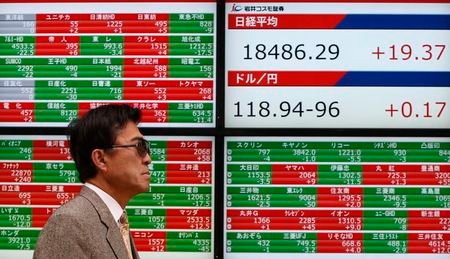
Asia’s Markets React to Tech Revival and BOJ’s Landmark Decision
Asian stock markets have recently experienced a significant uplift, driven primarily by a robust rebound in the technology sector. This surge reflects a renewed sense of investor confidence and a positive outlook for future growth across the continent’s key economies.
The upswing comes amidst a period of global economic recalibration, with investors carefully weighing various geopolitical and macroeconomic factors. The performance indicates a resilient market, capable of absorbing shifts and capitalising on emerging opportunities within the digital landscape.
A notable contributor to this positive sentiment is the strong recovery seen in technology shares, following a period of correction. Demand for semiconductors and advancements in artificial intelligence continue to underpin this sector’s renewed vigour, attracting considerable capital inflows.
Major tech hubs in Asia, including those in South Korea and Taiwan, have shown particular strength, leading the broader market indices higher. This reflects the deep integration of these economies into the global technology supply chain and innovation ecosystem.
The enthusiasm surrounding the tech rebound is not merely speculative; it is grounded in solid fundamentals and an optimistic long-term growth trajectory. Companies are reporting improved earnings, while innovation cycles continue to accelerate, bolstering investor confidence.
In a separate yet equally pivotal development, the Bank of Japan (BOJ) made a widely anticipated decision to raise its interest rates. This marks a historic moment, ending an era of negative rates that spanned eight years and signalling a significant shift in the nation’s monetary policy.
The move, the first rate hike in seventeen years, underscores the BOJ’s assessment that Japan is finally escaping persistent deflationary pressures. Evidence of sustained inflation, coupled with encouraging wage growth, provided the central bank with the impetus to act.
While largely expected by market participants, the BOJ’s decision still carries substantial implications for the Japanese economy and global financial markets. It indicates a growing confidence in Japan’s economic fundamentals and a potential normalisation of its monetary stance.
The impact on the Japanese Yen is a key area of focus, with the currency potentially strengthening as a result of higher yields. This could, in turn, affect export-oriented companies, though a stronger domestic economy could offset some of these challenges.
Globally, the BOJ’s policy shift signals a potential convergence with other major central banks that have already tightened monetary conditions. This could influence capital flows and investment strategies across various international asset classes.
The confluence of a resurgent technology sector and the BOJ’s landmark monetary policy adjustment creates a dynamic environment for Asian markets. Investors are now navigating a landscape where growth opportunities are juxtaposed with evolving interest rate dynamics.
This dual impetus suggests a complex but potentially rewarding period for investors focusing on the region. The interplay between technological innovation and traditional economic policy will undoubtedly shape market trajectories in the months ahead.
Maintaining a keen eye on further economic data from Japan, particularly inflation and wage figures, will be crucial for understanding future BOJ actions. Similarly, tracking global tech trends remains vital for gauging the sector’s sustained momentum.
Overall, the current scenario paints a picture of cautious optimism within Asian markets. The rebound in tech demonstrates resilience, while the BOJ’s move signifies a calculated step towards economic normalisation, offering new considerations for all market participants.