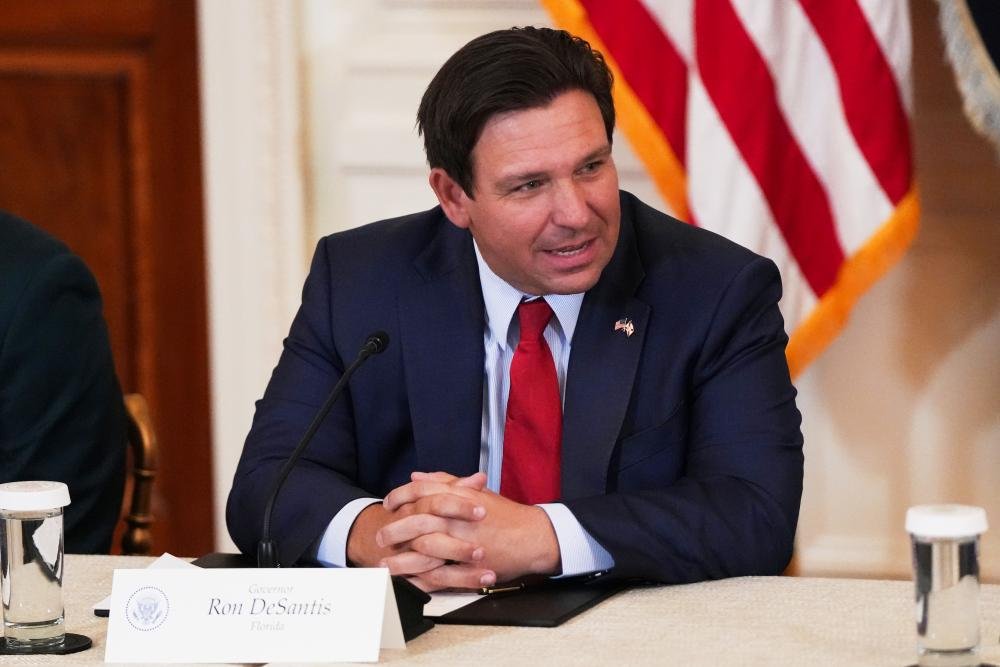
DeSantis Signs Landmark Proof of Citizenship Law as Trump’s Save Act Falters
The state of Florida has taken a significant step towards tightening its voting laws, with Governor Ron DeSantis signing a bill that requires proof of citizenship for voting. This move comes as former President Donald Trump’s Save America Act continues to face challenges. The new law aims to bolster the integrity of the electoral process by ensuring that only eligible citizens can cast their ballots.
The legislation has sparked intense debate, with supporters arguing that it will help to prevent voter fraud and maintain the trust of the electorate. Critics, on the other hand, claim that the law will disproportionately affect certain groups, such as minority communities and low-income voters. As the discussion unfolds, it is essential to analyse the potential impact of this law on the voting behaviour of Floridians.
The proof of citizenship requirement is not a new concept, as several other states have already implemented similar laws. However, the move has raised concerns about the potential barriers it may create for eligible voters. The law’s proponents argue that it is a necessary measure to prevent non-citizens from voting, while opponents claim that it will lead to voter suppression. The colour of the debate is further complicated by the fact that the law will affect different communities in varying ways.
As the Save America Act continues to flounder, DeSantis’s decision to sign the proof of citizenship bill has significant implications for the future of voting laws in the United States. The move is likely to inspire other states to follow suit, potentially leading to a patchwork of different voting requirements across the country. As the nation watches, it is crucial to consider the potential consequences of such a move and how it may affect the democratic process as a whole.
The signing of the bill has also sparked a discussion about the role of state governments in shaping voting laws. While some argue that states should have the autonomy to create their own voting requirements, others claim that a federal framework is necessary to ensure consistency and fairness. As the debate rages on, it is essential to examine the potential benefits and drawbacks of each approach and consider the potential impact on the electoral system.
In conclusion, the proof of citizenship law signed by DeSantis has significant implications for the state of Florida and the nation as a whole. As the country continues to navigate the complex landscape of voting laws, it is crucial to analyse the potential effects of such measures and consider the potential consequences for the democratic process. By examining the different perspectives and potential outcomes, we can work towards creating a fair and equitable electoral system that reflects the values of American democracy.