Uncovering the Truth: Do Computer Chips Slow Down with Age in the UK?
Understanding Silicon Aging: Separating Fact from Fiction
As technology enthusiasts in the UK, we often ponder whether computer chips genuinely deteriorate with time. The answer, surprisingly, is more nuanced than a simple yes or no. Typically, your ageing CPU or GPU doesn’t suddenly decide to underperform by 10% due to its five-year stint within your system. More often, if an older PC seems slower, the real culprits are likely accumulated dust, dried-out thermal interface material, background applications, operating system bloat, security patches, or newer, more demanding games.
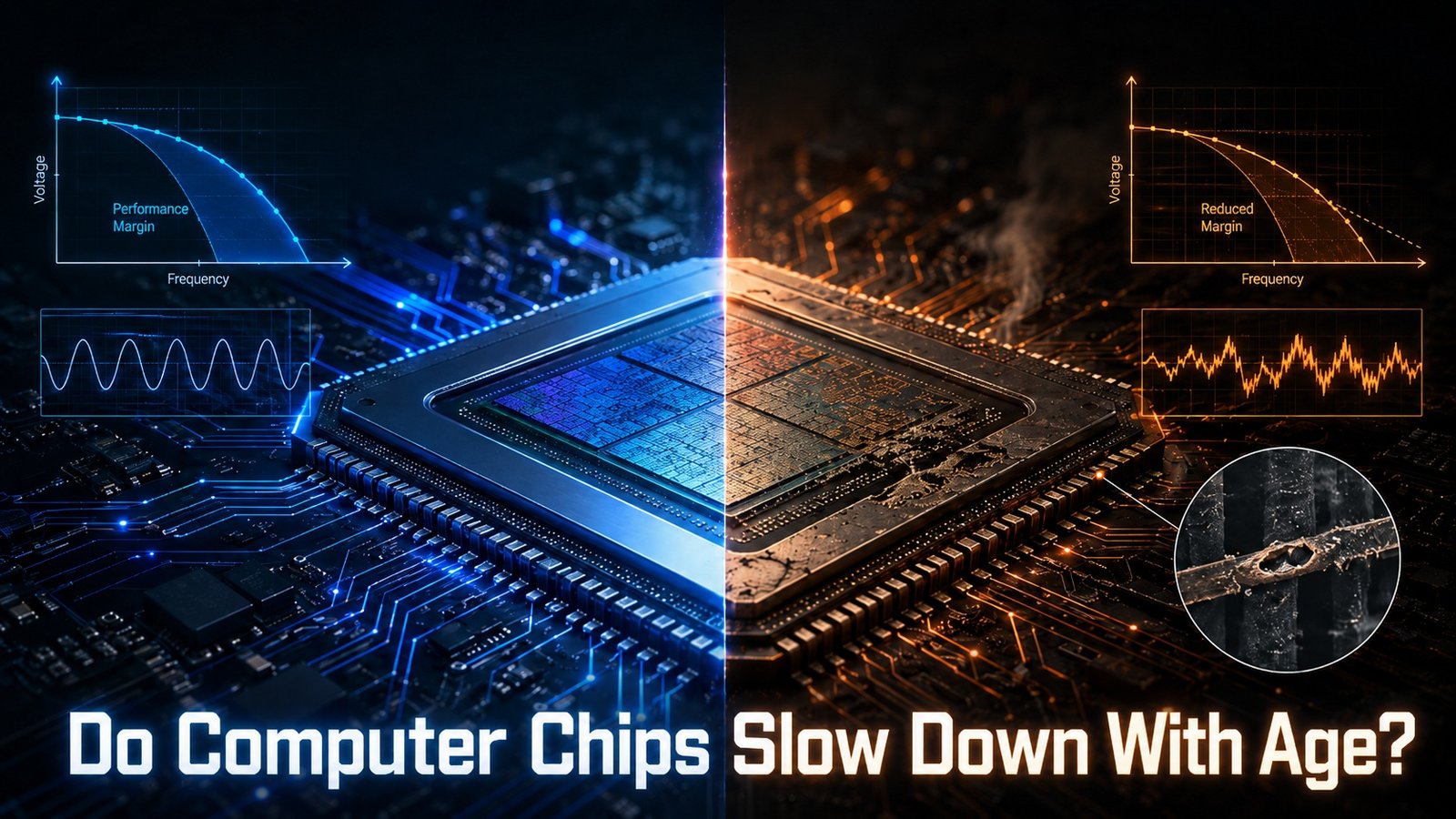
When we delve into the science behind silicon aging, it becomes apparent that the process is complex and multifaceted. Silicon, the primary material used in computer chips, can degrade over time due to various factors such as temperature fluctuations, power supply inconsistencies, and exposure to radiation. However, this degradation is usually negligible and doesn’t significantly impact the chip’s performance.
Moreover, modern computer chips are designed with built-in safeguards to mitigate the effects of aging. For instance, many CPUs and GPUs come equipped with thermal throttling, which reduces their clock speed when temperatures exceed a certain threshold. This prevents overheating, which can accelerate silicon degradation. Additionally, some chips feature adaptive voltage scaling, allowing them to adjust their power consumption based on workload demands.
Despite these safeguards, it’s essential to maintain your computer’s overall health to prevent slowdowns. Regularly cleaning dust from vents and heat sinks, updating drivers, and disabling unnecessary background applications can all contribute to optimal performance. Furthermore, using high-quality thermal interface materials and ensuring proper airflow within your system can help mitigate the effects of silicon aging.
In conclusion, while silicon aging is a real phenomenon, its impact on computer chip performance is often exaggerated. By understanding the underlying science and taking proactive steps to maintain your system, you can enjoy optimal performance from your computer components, regardless of their age. Whether you’re a gamer, content creator, or simply a heavy computer user in the UK, it’s crucial to stay informed about the latest developments in silicon technology and take steps to future-proof your system.